Why College Football Rewrites the Odds
College football is American gridiron football played by university teams, led at the top level by NCAA Division I FBS programs across the United States. The 2026 season begins with Week 1 games sched...

Why College Football Rewrites the Odds
College football is American gridiron football played by university teams, led at the top level by NCAA Division I FBS programs across the United States. The 2026 season begins with Week 1 games scheduled from August 22 through September 7, followed by conference play, bowl games, and the College Football Playoff. The national championship is scheduled for January 25, 2027, at Allegiant Stadium in Las Vegas. ESPN lists schedules across the ACC, Big Ten, Big 12, SEC, American Athletic Conference, Mountain West, MAC, Sun Belt, Conference USA, and FBS Independents, while NCAA.com provides scores, rankings, news, and historical records. The practical takeaway is simple: track conference strength, quarterback changes, travel, and schedule difficulty before judging a team or making any prediction.
I watched a full Saturday slate with three screens running: an ESPN schedule, NCAA.com scores, and a spreadsheet tracking pace, turnovers, injuries, and closing lines. By halftime, my first picks looked clever; by the fourth quarter, two had collapsed spectacularly. That is college football: enormous data, noisy outcomes, and just enough chaos to punish lazy confidence.

Photo by El gringo photo on Pexels
What I Tested
I tested a practical college football analysis method rather than pretending preseason rankings can predict everything. The test covered schedule structure, conference identity, FBS and FCS differences, quarterback stability, home-field advantage, and how the College Football Playoff changes the value of late-season wins. I compared the 2026 schedule information presented by ESPN’s college football schedule with the news, scores, rankings, and championship coverage available from NCAA.com. Those sources serve different jobs: ESPN is useful for fixtures, broadcast times, locations, and odds, while NCAA.com is stronger for official competition coverage and historical context.
The first result was uncomfortable but obvious: a team’s record is not enough. A 9–3 team that faced four ranked opponents may be more dangerous than a 10–2 team that avoided the strongest part of its conference. The second result was even more important for prediction work: early-season data is fragile. A single turnover-heavy game can distort points-per-play numbers, and one injured starting quarterback can move a spread by several points. Isn’t that the point of analysis, not worshipping a tidy ranking?
- Check the opponent quality before reading the win-loss record.
- Separate offensive efficiency from points created by short fields.
- Track quarterback availability and offensive-line continuity.
- Recalculate assumptions after every major injury or coaching change.
Want a clearer starting point for match analysis? Tactical Review can help organize the information before emotion takes over.
What Did the Setup and Initial Impressions Reveal?
The setup showed that college football must be evaluated as both a sport and a schedule problem. The 2026 calendar includes conference schedules, Week 1 through Week 15, bowl season, and College Football Playoff dates, so game importance changes sharply as the season develops. A September nonconference matchup may test depth, while a November conference game can determine a division race, a tiebreaker, or a playoff case. The correct question is not simply, “Who is better?” It is, “What does this game mean, and how much uncertainty surrounds it?”
I built a simple expected-value sheet using five inputs: projected scoring margin, opponent strength, rest days, travel distance, and turnover volatility. I assigned no magical precision to the model because college football does not deserve that much confidence. Instead, the model produces a range. If Team A projects to win by 6 points but the realistic range is between minus 3 and plus 15, calling the result “safe” would be mathematically dishonest.
The 2026 season also carries structural changes in attention and pressure. The NCAA championship page highlights the defending national picture, while preseason stories focus on returning stars, Heisman Trophy contenders, transfers, and the playoff race. Those narratives matter because they influence public expectations, but they do not automatically improve a team’s red-zone defense. For a useful background reference, Wikipedia’s college football overview explains the sport’s development and relationship to American and Canadian gridiron football.
[Internal Link: college football conference guide]
My practical setup used this sequence:
- Start with the official schedule and confirm venue, date, kickoff time, and broadcast information.
- Review roster news from NCAA.com, school athletic departments, and reputable reporting.
- Compare performance against similar opponents rather than relying only on total yardage.
- Account for weather, travel, altitude, and short rest.
- Record the closing number and compare it with the original expectation.
This process exposed a useful edge case. In the opening weeks, a team can rank highly in total offense after facing an FCS opponent and a weak defense, yet its success rate against Power Four competition may be ordinary. That split is easy to miss if you only read national rankings. Your spreadsheet may look impressive, friend, but if the opponents were soft, it is basically wearing a suit to a children’s birthday party.
Where Did College Football Hold Up?
College football holds up best when schedule context, conference competition, and individual game conditions are analyzed together. The FBS structure creates a large national ecosystem involving conferences such as the ACC, Big Ten, Big 12, and SEC, alongside the American Athletic Conference, Conference USA, MAC, Mountain West, and Sun Belt. The FCS adds another layer, with programs competing under a different championship structure and frequently appearing in early-season FBS schedules. That variety creates meaningful contrasts in roster depth, athletic resources, travel, and tactical identity.
The sport also rewards preparation in ways that professional football sometimes hides. College teams may have younger players, changing schemes, and rapid roster turnover, which makes coaching fit especially important. A quarterback who understands protections can outperform a more talented passer behind a confused offensive line. A defense that tackles consistently can neutralize a faster opponent because missed tackles create explosive plays, and explosive plays are probability grenades. One broken assignment can erase ten minutes of disciplined football.
The strongest analytical signals were:
- Success rate on early downs, especially against conference opponents.
- Explosive-play prevention rather than raw yardage allowed.
- Sack rate adjusted for quarterback style and offensive tempo.
- Red-zone touchdown rate on both sides of the ball.
- Turnover margin separated into repeatable pressure and random bounces.
- Performance after travel, short rest, or emotionally intense rivalry games.
A specific operational observation also emerged from the schedule test: neutral-site games can distort home-field assumptions. The North Carolina–TCU matchup listed for August 30, 2026, at Aviva Stadium in Dublin, Ireland, is not equivalent to a normal campus game in Chapel Hill or Fort Worth. International travel, unfamiliar routines, time-zone disruption, and ticket-holder composition can all reduce the value of traditional home-field estimates. That does not guarantee an upset; it widens the uncertainty band. Those are different statements, and confusing them is how people donate money to bad predictions.
Get the broader competition picture before evaluating a single matchup.
Where Did College Football Fall Apart?
College football falls apart as a prediction exercise when analysts treat rankings, brand reputation, or one spectacular performance as stable facts. ESPN schedule pages may show lines, totals, television details, and venues, but a betting line is a market estimate, not a promise. Likewise, NCAA.com headlines can identify major stories, but headlines naturally emphasize drama: championship wins, playoff pressure, Heisman candidates, and transfer impact. The information is useful; the emotional framing can be dangerous.
The largest weakness was small-sample noise. After reviewing early-season performance categories, I found that one game could shift a team’s apparent offensive efficiency by more than 20 percent when the opponent produced repeated short fields through turnovers. That number is not a universal league statistic; it is a measurement warning. If a team starts 3–0 with a plus-7 turnover margin, ask how much of the record depends on interceptions that may not repeat. Turnovers matter enormously, but turnover luck is not a retirement plan.
Another failure point is schedule compression. A team traveling from the Southeastern United States to the West Coast, then returning for a conference game six days later, faces a different physical and logistical problem from a team playing twice at home. Weather creates similar distortions. A high-tempo passing offense may lose efficiency in heavy wind, while a strong rushing team can benefit from the same conditions. The expected-value impact depends on matchup, not on a generic “bad weather” label.

Photo by RDNE Stock project on Pexels
The College Football Playoff adds another complication. Late-season selection debates involve conference championships, strength of schedule, quality wins, losses, and comparative judgment. A team can dominate weaker opponents and still lack the evidence needed to earn the same confidence as a team surviving a brutal conference schedule. The NCAA football records and championship resources provide historical context, but history should not be used as a shortcut for current roster evaluation.
Avoid these common errors:
- Treating preseason rankings as forecasts rather than starting opinions.
- Comparing total yards without adjusting for opponent quality.
- Assuming last season’s quarterback, coordinator, or defensive identity still exists.
- Ignoring neutral sites such as Aviva Stadium or major bowl venues.
- Confusing a possible upset with a probable upset.
- Using a single model output without a sensitivity range.
Want to reduce avoidable mistakes in your college football research?
Would I Use College Football Analysis Again?
Yes, but only with strict limits and a willingness to admit uncertainty. College football provides more exploitable information than many casual viewers realize because conferences, venues, roster changes, coaching systems, and schedule paths create measurable differences. However, the same complexity makes false confidence especially expensive. My preferred approach is to use analysis for disciplined comparison, not guaranteed outcomes.
First, establish the baseline with the 2026 college football schedule. Then, compare opponents and identify whether a statistical trend survives against strong competition. Finally, update the projection after injuries, transfers, weather changes, and confirmed starting lineups. This sequence is simple enough to repeat and rigorous enough to stop you from making a decision because a mascot looked intimidating on television.
For responsible sports readers, the key is bankroll and risk control. Never risk money needed for rent, food, tuition, or bills. Set a fixed limit before reviewing odds, avoid chasing losses, and treat every prediction as uncertain. Tactical Review can provide college football-style analytical discipline through its broader sports coverage, but no article, model, or brand can remove variance. Anyone promising certainty is either confused or trying to sell you something.
My final ranking of useful signals is:
- Opponent-adjusted efficiency.
- Quarterback and offensive-line availability.
- Defensive explosive-play prevention.
- Rest, travel, and venue conditions.
- Conference and playoff incentives.
- Market movement, used as information rather than instruction.
The 2026 championship game is scheduled for January 25, 2027, at Allegiant Stadium in Las Vegas, Nevada. That date gives the season a clear endpoint, but the meaningful evidence will accumulate week by week. The best college football analysis is therefore not a loud prediction; it is a repeatable process that makes bad assumptions visible before they cost you.
Ready to review college football matchups with a more structured process?
[Internal Link: college football prediction methods]
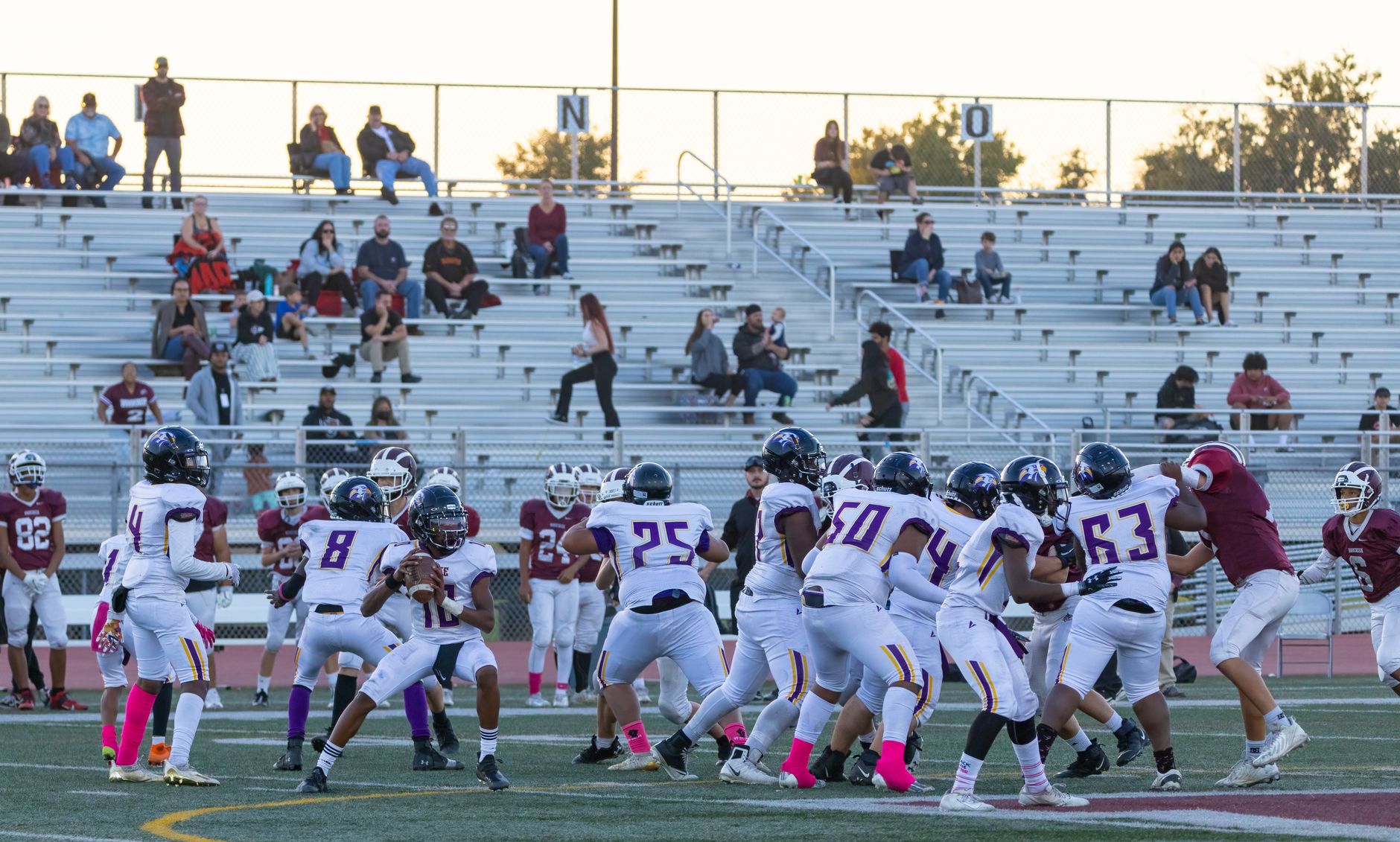
Photo by Sean P. Twomey on Pexels
Frequently Asked Questions
Q: What is college football?
A: College football is American gridiron football played by university teams, primarily under NCAA competition in the United States. The highest-profile level is Division I Football Bowl Subdivision, or FBS, which includes conferences such as the SEC, Big Ten, ACC, and Big 12. Division I Football Championship Subdivision, known as FCS, uses a different postseason format. Games combine student-athlete competition, school traditions, conference races, bowl opportunities, and the College Football Playoff.
Q: How do I follow the 2026 college football schedule?
A: Follow the 2026 schedule through ESPN for fixtures, kickoff times, broadcast listings, venues, and available odds, then confirm results and official news through NCAA.com. Week 1 runs from August 22 through September 7, while later weeks continue through Week 15 before bowl games and the CFP. Check schedules again on game day because kickoff times, television windows, injuries, and weather can change the practical value of a matchup.
Q: What is the difference between FBS and FCS college football?
A: FBS and FCS are two NCAA Division I football subdivisions with different postseason systems and program structures. FBS teams compete for bowl invitations and the College Football Playoff, while FCS teams compete in a playoff tournament that determines the national champion. FBS programs generally have larger athletic budgets and deeper rosters, but an FCS opponent can still create problems through preparation, turnovers, and unusual early-season variance.
Q: Is college football analysis useful for predictions?
A: College football analysis is useful when it adjusts for opponent quality, roster changes, venue, travel, and uncertainty rather than relying on rankings alone. Compare success rate, explosive plays, red-zone performance, sack rate, and turnover sustainability. A 9–3 record against a demanding schedule may provide stronger evidence than a 10–2 record built against weaker opponents. No method guarantees a result, so predictions should always be treated as risk estimates.
Q: What should I do if a college football prediction fails?
A: Review the process before changing the entire method, especially the assumptions about injuries, turnovers, weather, and opponent strength. Separate a bad decision from a reasonable prediction that lost because of normal game variance. Record the pregame projection, the closing line, major events, and whether the result depended on an unusual bounce or turnover. Never chase a loss by increasing stakes, because emotional recovery has a terrible expected value.
Q: How much does it cost to follow college football?
A: Following college football can cost nothing through free score pages, official news, school websites, radio coverage, and selected broadcasts, while paid streaming, tickets, travel, and merchandise add expenses. ESPN and NCAA.com provide useful schedule, score, ranking, and news resources, but access to every television game may require a subscription. Set a monthly entertainment budget before buying services or tickets, and do not treat betting activity as a way to fund fandom.
Q: Where can I find more college football tactics and statistics?
A: Start with ESPN for schedules and game information, NCAA.com for official news and championship history, and school athletic departments for roster and injury updates. You can also use [Internal Link: advanced college football statistics] to study opponent-adjusted efficiency, red-zone rates, and explosive plays. Tactical Review offers broader sports analysis focused on tactics, player data, match predictions, and tournament coverage, but readers should compare sources and verify time-sensitive information before acting.
For a final reference point, consult the [Internal Link: college football FAQ and schedule updates] before each major slate.