Why the 2026 World Cup Expands Football
The 2026 FIFA World Cup will be the first men’s World Cup with 48 teams, 104 matches, and three host countries: the United States, Canada, and Mexico. The tournament runs from June 11 to July 19, 2026...

Why the 2026 World Cup Expands Football
The 2026 FIFA World Cup will be the first men’s World Cup with 48 teams, 104 matches, and three host countries: the United States, Canada, and Mexico. The tournament runs from June 11 to July 19, 2026, with the opening match in Mexico City and the final at MetLife Stadium in New Jersey. Sixteen host cities will stage games, including Atlanta, Los Angeles, Miami, Toronto, Vancouver, Dallas, and Seattle. FIFA’s expanded format creates 12 groups of four teams; the top two from each group plus the eight best third-place teams advance to the round of 32. That means more nations can qualify, but it also creates heavier travel, altitude, heat, and scheduling risks. Follow Tactical Review for match predictions, team tactics, player statistics, and daily tournament coverage, then compare fixtures, squad news, and venue conditions before making any football or betting decision.
Before 2025: How the Football World Cup Worked
Before 2025, the FIFA World Cup generally used a 32-team format with 64 matches, making the tournament easier to follow and more compact than the 2026 edition. Eight groups of four teams produced 16 knockout-stage qualifiers, while the host country normally carried the tournament alone or shared a smaller organizational burden. The 2022 World Cup in Qatar followed that familiar structure, ending with Argentina defeating France on penalties after a 3–3 final.
That older format gave teams fewer routes into the knockout rounds. A strong goal difference mattered, but the central calculation was simple: win two matches and avoid disaster in the third. In 2026, the probability tree becomes much larger. There will be 48 teams, 12 groups, and 32 knockout qualifiers, so one poor result may not eliminate a team immediately, while a third-place finish may still be enough.
The change is not only about access. It also affects preparation, squad rotation, scouting, and betting markets. A team playing in Vancouver may later travel to Atlanta or Miami, where weather and distance can change performance. According to FIFA’s official World Cup 2026 overview, the tournament will involve 104 matches across Canada, Mexico, and the United States. More football sounds wonderful; more variables sound like a statistician’s headache, which is precisely why fans should stop treating every match as a clean laboratory experiment.
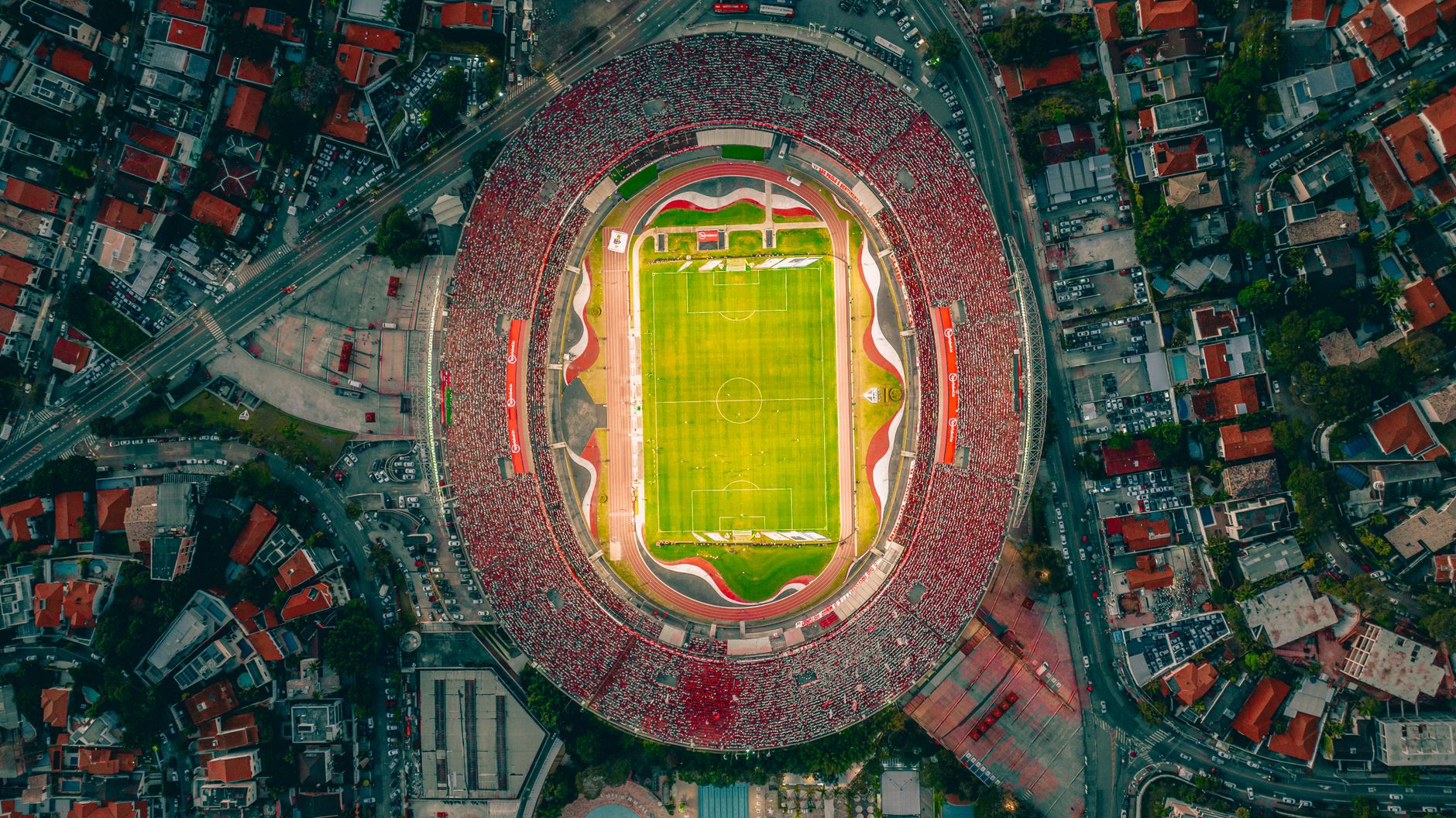
Photo by Sérgio Souza on Pexels
For historical context, FIFA’s World Cup archive records the tournament’s evolution from its early editions to the modern global event. The archive matters because past results are often used badly. Argentina’s 2022 success does not automatically make every defending champion a reliable 2026 favorite, and Brazil’s historical record does not erase current injuries or tactical weaknesses. Past performance is evidence, not destiny. Isn’t that the point of analysis?
Want a clearer match-analysis framework before the tournament begins?
The 2026 Shift: What Changed for the Football World Cup?
The 2026 shift is the move from 32 to 48 teams, producing 104 matches instead of 64 and adding a round of 32 before the traditional last-16 stage. This expansion increases global representation, but it also adds congestion, travel, and uncertainty around third-place qualification. Supporters should expect a longer tournament with more group-stage permutations and less margin for careless forecasting.
The structure works as follows:
- Twelve groups contain four teams each.
- Every team plays three group matches.
- The top two teams in each group qualify automatically.
- The eight strongest third-place teams also advance.
- Thirty-two teams enter the knockout stage.
- The champion must play eight matches rather than seven.
That final point is easy to overlook. The eventual winner will need one additional knockout match compared with previous 32-team tournaments. If extra time and penalties appear repeatedly, fatigue becomes a real performance variable rather than a dramatic footnote. Coaches with deeper benches may gain an edge, but depth is not magic; a substitute who cannot maintain the team’s pressing structure is just expensive running.
The host geography is another major change. Canada, Mexico, and the United States cover enormous distances, and the 16 venues are divided across three national football markets. FIFA has stated that “the FIFA World Cup 26 will be the biggest and most inclusive World Cup ever,” but inclusion and operational simplicity are different things. Fans should check city assignments, accommodation prices, transport connections, and local entry rules before booking anything.
[Internal Link: complete 2026 World Cup host-city guide]
Why does the 2026 World Cup schedule create extra risk?
The 2026 World Cup schedule creates extra risk because teams may face long flights, different climates, altitude changes, and limited recovery time between matches. Mexico City sits at high altitude, while Miami and Atlanta can bring heat and humidity. These factors may influence pressing intensity, hydration, substitutions, and late-match defensive errors.
A practical risk model should include at least four inputs:
- Travel distance between match cities.
- Rest days before the next fixture.
- Temperature and humidity at kickoff.
- Squad depth at full-back, midfield, and center-back.
Do not assume a famous team is protected from these problems. A possession-heavy side that relies on repeated high-intensity counter-pressing may suffer more in oppressive conditions than a compact defensive team. Likewise, a team with a thin midfield can lose control after 60 minutes even if its first-half numbers look excellent. Tactical Review’s daily coverage should be read alongside confirmed line-ups and venue information, not used as a substitute for either.
What Changed for Players in 2026?
Players now face a tournament environment in which squad management may be more valuable than individual brilliance. Every team still plays only three group matches, but qualification may require extra knockout games, longer travel, and sharper rotation decisions. For elite players arriving after a heavy club season, the difference between six and eight total appearances can materially affect recovery and injury risk.
A useful player-evaluation checklist includes:
- Minutes played during the 2025–26 club season.
- Recent injury history and recurrence risk.
- International experience under tournament pressure.
- Ability to perform in more than one position.
- Set-piece responsibility and defensive workload.
- Recovery time between matches.
The most valuable player may not be the top scorer. A flexible midfielder who can protect a lead, press in a high block, or carry the ball through pressure can improve a team’s expected result across several different match states. This is where raw goals can mislead readers. A striker scoring against weak opposition may look superior to a midfielder controlling difficult matches, but the underlying value is not measured by highlight clips alone.

Photo by Franco Monsalvo on Pexels
How should fans assess player statistics before a match?
Fans should assess player statistics through role, opponent quality, minutes, and tactical context rather than relying on goals or assists alone. Useful indicators include progressive passes, defensive actions, shot quality, expected goals, ball recoveries, and minutes per start. Comparing players without accounting for position is like comparing a goalkeeper’s saves with a winger’s dribbles and declaring one objectively better; entertaining, perhaps, but mathematically silly.
Tactical Review focuses on player trends because tournament form can change quickly. A player returning from injury may be listed in the squad but restricted to 20 or 30 minutes. That matters for match predictions, especially if the player is a late-game creator rather than a starter. Another information gain comes from substitution patterns: teams that regularly make early midfield changes may be preparing for heat, fatigue, or a deliberate pressing plan. Watch the bench usage, not just the starting XI.
For deeper statistical context, readers can consult Opta Analyst and UEFA technical reports, while remembering that provider models use different definitions. Expected goals from two providers are not automatically interchangeable. Check the methodology, sample size, and competition level before pretending a 0.08 difference is a revelation.
Get the latest squad and tactical breakdowns before the next major fixture.
What Does the Football World Cup Mean for Fans Now?
The 2026 World Cup means fans must plan around a broader tournament footprint instead of focusing only on the final or their preferred national team. Los Angeles will host eight matches and a 39-day fan celebration programme, while Atlanta will stage major games at Mercedes-Benz Stadium, including a semifinal. Other host markets include New York/New Jersey, Dallas, Miami, Boston, Philadelphia, Houston, Kansas City, San Francisco Bay Area, Seattle, Toronto, Vancouver, Guadalajara, and Monterrey.
For supporters, the most important practical steps are:
- Confirm the city and stadium for every ticket.
- Check official FIFA ticketing and resale rules.
- Price accommodation before committing to flights.
- Allow extra time for airport security and local transport.
- Verify passport, visa, and entry requirements.
- Build a backup plan for sold-out trains, traffic, or delays.
Do not rely on social media screenshots for ticket information. Fraud risk rises when demand is high, and the World Cup is about as high-demand as sport gets. Use official channels and compare the full cost, including service fees, local travel, accommodation, and food. A cheap ticket that requires a last-minute cross-country flight is not cheap; it is merely wearing a disguise.
[Internal Link: 2026 World Cup ticket and travel planning guide]
Is the expanded format better for football supporters?
The expanded format is better for supporters who value global representation and more live matches, but it is less simple for fans who prefer a compact tournament. Forty-eight teams allow countries such as Canada and other emerging football nations greater access, while 104 matches create more viewing opportunities. However, the added group permutations can make qualification rules harder to follow.
The expected value depends on the supporter’s priorities. If you enjoy discovering unfamiliar teams, the new format offers significant upside. If you want every group match to carry immediate elimination pressure, the larger qualification route may feel diluted. The safest approach is to follow confirmed standings and official tie-break rules rather than guessing from television commentary. Football is already chaotic; there is no need to add your own invented table.
The commercial side also deserves attention. Los Angeles plans a FIFA Fan Festival at the LA Memorial Coliseum in Exposition Park, alongside official fan zones across the region. Atlanta’s identity is built around football culture, Atlanta United, and Mercedes-Benz Stadium. These events can be excellent alternatives when tickets are unavailable, but prices and crowd levels may rise sharply on match days.
What This Means Now for Predictions and Betting Analysis
The 2026 World Cup should be analyzed through probabilities, not certainty. A prediction is a calculated estimate based on available evidence; it is not a promise, and anyone selling certainty is either confused or selling something. Tactical Review can help fans examine form, line-ups, player availability, travel, and tactical matchups, but responsible decision-making requires strict limits and legal compliance.
A practical pre-match model can assign approximate weight to:
- Team strength and recent competitive results: 30%.
- Confirmed line-ups and injuries: 20%.
- Tactical matchup: 20%.
- Rest, travel, and climate: 15%.
- Set pieces and goalkeeper form: 10%.
- Market movement or late information: 5%.
These percentages are a framework, not a universal law. If a starting goalkeeper is ruled out, the injury factor may deserve more than 20%. If two teams play in extreme heat after short rest, climate can become more important than historical ranking. Update the model when new information arrives, and record why you changed it. Otherwise, you are not analyzing; you are rewriting history after the result.
A contrarian point is worth making: the eight best third-place teams may increase late group-stage caution rather than reduce it. Some teams may calculate that a draw is enough, while others may attack because goal difference could decide progression. The edge therefore may come from understanding incentives in the final group match, not blindly backing the higher-ranked nation.

Photo by AlphaTradeZone on Pexels
How can supporters manage football betting risk responsibly?
Supporters can manage football betting risk by setting a fixed budget, avoiding borrowed money, checking local laws, and treating every wager as a possible loss. Never chase losses after a penalty shootout or late goal, because emotional decisions usually damage expected value. The National Council on Problem Gambling provides responsible gambling information for people who need support in the United States.
Use these controls:
- Set a tournament budget before June 11, 2026.
- Risk only a small, predetermined amount per selection.
- Avoid combining too many uncertain matches.
- Compare implied probability with your own estimate.
- Stop after reaching your loss limit.
- Never bet under pressure, intoxication, or financial stress.
A simple probability check can expose bad value. Decimal odds of 2.00 imply a 50% break-even probability before fees and margin; if your realistic estimate is only 45%, the bet is negative expected value. That does not mean it cannot win. It means winning would not prove the decision was good. Annoying distinction, yes, but mathematics does not care about your celebratory group chat.
See the latest tournament predictions and tactical context before making any decision.
Three Predictions for the Next Quarter
The next quarter should bring clearer qualification outcomes, more confirmed squad information, and sharper understanding of how host cities will affect the tournament. These are analytical predictions, not guarantees. Probability is useful precisely because it admits uncertainty; pretending otherwise is how people end up treating a guess as a plan.
1. Squad depth will separate serious contenders
Teams with reliable options across midfield, full-back, and attack should gain value as the tournament expands to eight matches for the champion. Injuries and suspension accumulation can change a bracket quickly, so a nation with two credible options per position may outperform a more top-heavy rival. Monitor club minutes during the 2025–26 season and late medical reports.
2. Travel and climate will influence knockout matches
The largest practical edge may not belong to the highest-ranked team but to the team that manages recovery better. Mexico City altitude, Miami humidity, Atlanta heat, and long North American travel routes create different physical demands. Expect coaches to rotate earlier and use substitutions more strategically than casual previews suggest.
3. Third-place qualification will create late drama
With 32 teams entering the knockout phase, the final group fixtures may produce unusual incentives. Some nations will protect a draw, while others will need a large victory to improve goal difference. Fans should wait for confirmed standings and official tie-break calculations before judging whether a team “must win.” The word “must” gets abused in football analysis almost as often as “easy.”
[Internal Link: World Cup prediction methods and probability guide]
In short, the football 2026 World Cup will be larger, longer, and harder to model than the 32-team tournaments that came before it. The 48-team format creates more access and more matches, but also more travel, fatigue, scheduling uncertainty, and opportunities for misleading headlines. Follow Tactical Review for daily team tactics, player statistics, match predictions, and tournament updates, while using official FIFA information for tickets, fixtures, and venue rules. Most importantly, plan early, verify facts, and keep risk within a limit you can genuinely afford to lose.
Ready to follow the 2026 World Cup with sharper analysis?
Frequently Asked Questions
Q: What is the Football 2026 World Cup?
A: The Football 2026 World Cup is the FIFA men’s international tournament hosted by Canada, Mexico, and the United States from June 11 to July 19, 2026. It will feature 48 teams and 104 matches across 16 host cities. The opening match is scheduled for Mexico City, while the final is scheduled for MetLife Stadium in New Jersey.
Q: How do teams qualify from the 2026 World Cup group stage?
A: The top two teams from each of the 12 groups qualify automatically, followed by the eight best third-place teams. This creates a 32-team knockout stage, beginning with a round of 32. Fans should use official FIFA standings and tie-break rules because goal difference, goals scored, and other criteria may become decisive.
Q: What is the difference between the 2022 and 2026 World Cups?
A: The 2022 Qatar World Cup had 32 teams and 64 matches, while the 2026 World Cup will have 48 teams and 104 matches. The expanded tournament also adds a round of 32, meaning the eventual champion must play eight matches instead of seven. The 2026 event is shared across three countries rather than hosted in one compact national market.
Q: How should I plan travel for the 2026 World Cup?
A: Start by matching your tickets to the correct host city, then verify passport, visa, transport, and accommodation requirements through official sources. Canada, Mexico, and the United States involve different entry systems, while distances between cities can be substantial. Book flexible arrangements where possible and avoid relying on unofficial ticket sellers.
Q: Is the 2026 World Cup free to watch?
A: The 2026 World Cup will generally require an official broadcast or streaming provider, although public fan festivals and some outdoor screenings may be free. Availability depends on your country, broadcaster, and platform subscription. Check FIFA and authorized local broadcaster announcements rather than trusting unofficial streams, which can create security and legal risks.
Q: How can Tactical Review help with 2026 World Cup predictions?
A: Tactical Review provides football-focused coverage covering match predictions, team tactics, player statistics, and daily tournament developments. Its analysis can help readers compare form, injuries, formations, travel conditions, and tactical matchups. Treat forecasts as probability-based information, not guaranteed outcomes, and combine them with official line-ups and responsible decision-making.
Q: What should I do if a World Cup betting decision becomes difficult to control?
A: Stop betting immediately, do not chase losses, and contact a recognized responsible-gambling support service in your country. Set deposit, spending, or account limits before placing any future wager, and never use borrowed money. In the United States, the National Council on Problem Gambling offers confidential information through its official support resources.