Inside FIFA World Cup: A 2026 Schedule Breakdown
The 2026 FIFA World Cup runs from June 11 to July 19, 2026, across Canada, Mexico, and the United States, with 48 teams playing 104 matches in 16 venues. FIFA is expanding the tournament from 32 teams...

Inside FIFA World Cup: A 2026 Schedule Breakdown
The 2026 FIFA World Cup runs from June 11 to July 19, 2026, across Canada, Mexico, and the United States, with 48 teams playing 104 matches in 16 venues. FIFA is expanding the tournament from 32 teams and 64 matches, creating a longer schedule, more travel, and a much larger prediction market. The opening match is scheduled for Mexico City, while the final will take place at MetLife Stadium in East Rutherford, New Jersey. The competition begins with 12 groups of four teams, followed by a Round of 32, Round of 16, quarter-finals, semi-finals, and final. Tactical Review tracks team form, player statistics, match predictions, and schedule-based advantages throughout the tournament. The practical takeaway is simple: check the confirmed FIFA fixture, venue, kickoff time, and squad news before making any forecast.
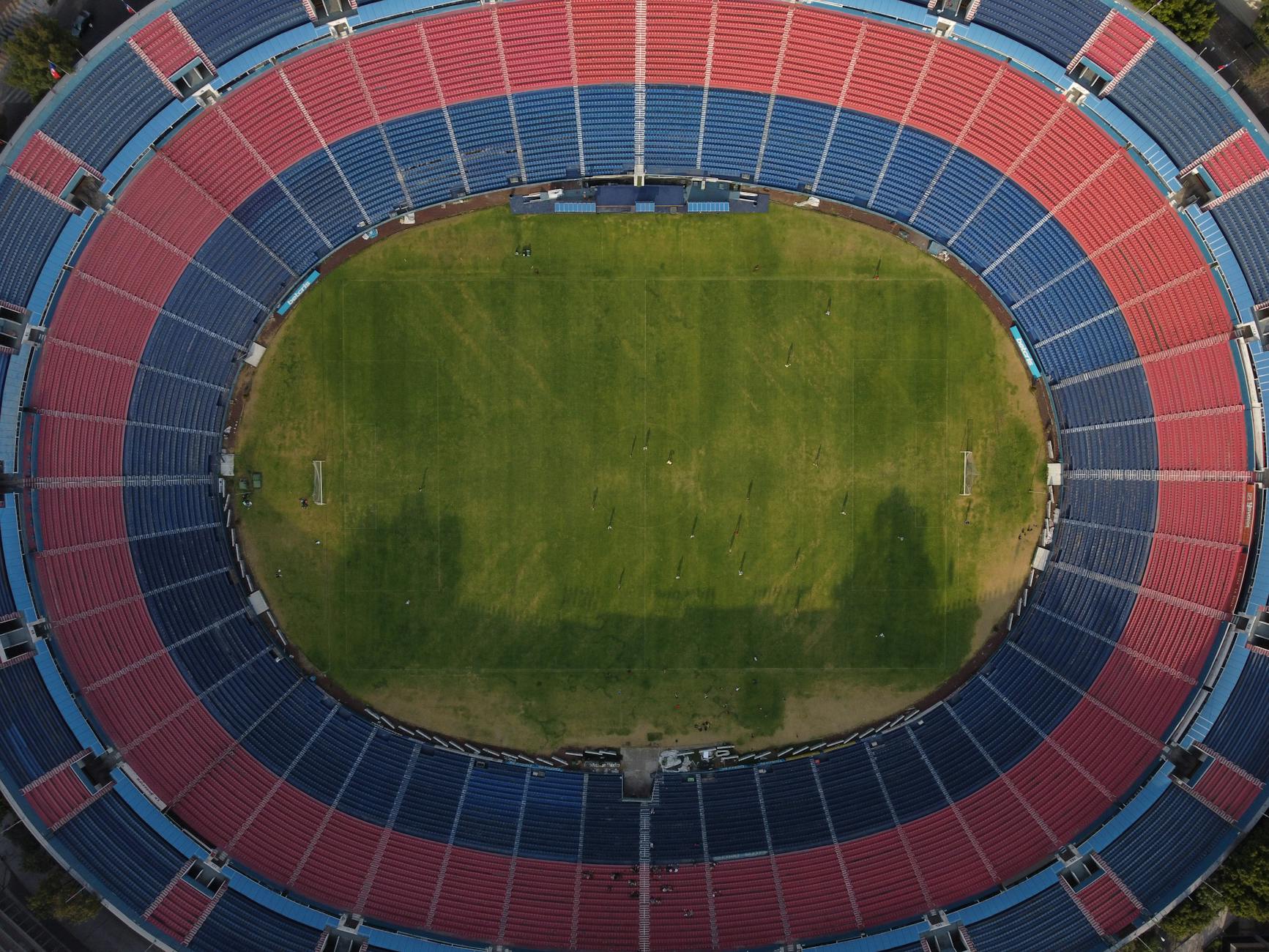
Photo by Israel Torres on Pexels
The biggest World Cup trend for 2026 is not merely the larger field; it is the increased importance of scheduling. A 48-team tournament means more matches, more qualification permutations, and more opportunities for fatigue to distort pre-match expectations. If you treat every group-stage fixture as an isolated event, congratulations, you have found a creative way to ignore the main variable.
Want a clearer tournament overview? Tactical Review provides daily World Cup coverage for readers comparing teams, tactics, injuries, and match probabilities.
Before 2025: how the World Cup schedule worked
Before 2025, the men’s FIFA World Cup normally used a 32-team format with eight groups of four teams, 64 total matches, and a four-match knockout route from the Round of 16 to the final. The 2022 FIFA World Cup in Qatar followed that model from November 20 to December 18, with Argentina defeating France on penalties in Lusail. The compact structure made the group stage easier to understand because each team played three matches and the top two advanced from every group.
The old format also created a relatively simple probability model. A team needed a strong three-match return, usually four or five points, to give itself a realistic chance of reaching the knockout stage; however, goal difference and the final group match could change everything. FIFA’s official World Cup archive records the historical tournament formats, host nations, results, and champions. In plain terms, the 32-team system offered fewer fixtures but greater margin for error in tournament planning, while the 2026 format rewards squad depth and travel management more heavily.
The schedule before 2025 also concentrated attention on a small set of familiar venues. Russia 2018 used 12 stadiums in 11 cities, while Qatar 2022 used eight stadiums in five host cities. Those events differed sharply in climate, distance, and recovery time, proving that the venue is not decoration; it is part of the competitive equation. A team crossing multiple time zones can lose training quality even when its starting eleven looks stronger on paper.
For readers studying historical tournament context, our [Internal Link: FIFA World Cup format history] connects previous structures with the 2026 changes. That matters because comparing a 2026 group projection directly with an eight-group tournament is not a clean statistical comparison. The sample size, qualification route, and knockout path are different, so the old numbers need adjustment rather than blind reuse.
What is the 2026 FIFA World Cup shift?
The 2026 FIFA World Cup shift is the expansion to 48 teams, 12 groups, 104 matches, and a Round of 32, hosted across Canada, Mexico, and the United States from June 11 to July 19, 2026. The three host nations qualify automatically, while the remaining 45 places come through FIFA’s regional qualification system and the six-team FIFA Play-Off Tournament.
The tournament is divided into three practical stages:
- Group stage: 48 teams are placed into 12 groups of four, with each team playing three matches.
- Round of 32: The top two teams from each group advance, alongside the eight best third-placed teams.
- Knockout stage: The competition continues through the Round of 16, quarter-finals, semi-finals, third-place match, and final.
That format creates 104 matches rather than the 64 used at Qatar 2022, an increase of 40 fixtures, or 62.5 percent. FIFA’s 2026 World Cup information page identifies the tournament’s host countries, dates, and expanded competition structure. The arithmetic is not complicated, but the consequences are: more teams qualify, more matches influence qualification, and more teams may reach the knockout phase despite inconsistent group-stage performances.
A less obvious issue is the third-place qualification rule. In a four-team group, the top two teams qualify automatically, but only eight of the 12 third-placed teams advance. That means a team may earn four points and still face danger if its goal difference is weak, while another team with an identical record could progress. The expected value of a late goal therefore rises because goal difference can become a tie-breaker rather than a minor detail.
See the official tournament framework before building your bracket; guessing here is how people lose an afternoon and then blame the draw.

Photo by Yara Solis Fuentes on Pexels
The host geography is another major change. Canada, Mexico, and the United States will stage matches in 16 venues across three countries, with cities including Toronto, Vancouver, Mexico City, Guadalajara, Monterrey, Los Angeles, Seattle, Dallas, Atlanta, Miami, and New York/New Jersey. The final is planned for MetLife Stadium, while the opening match is planned for Estadio Azteca. FIFA has described the event as the first men’s World Cup hosted by three nations, although Mexico becomes the first country to host matches at three separate editions.
Travel risk deserves more attention than it normally receives. A team based on the west coast may face a long flight to the central or eastern United States, while a side moving between Mexico and Canada must handle altitude, heat, humidity, and time-zone changes. A practical edge case is the difference between a short domestic transfer and an international movement requiring border logistics, security coordination, and altered training schedules. Those details can remove one full recovery session, which is meaningful when matches arrive every few days.
What changed for players and teams?
Players now face a longer tournament pathway, a wider geographic footprint, and greater demands on squad rotation. Every team still plays only three group matches, but advancing through the Round of 32 adds another knockout fixture before the traditional Round of 16, increasing the maximum route to the final. A deep run therefore requires more than an excellent starting lineup; it requires substitutes who can maintain structure under pressure.
The main player-impact factors are:
- Recovery: Short turnarounds make minutes management and sleep planning important.
- Travel: Long flights can affect muscle recovery, hydration, and training intensity.
- Climate: June and July conditions vary between Mexico, Canada, and the United States.
- Squad depth: Suspensions or injuries may carry greater tactical consequences.
- Rotation timing: Resting players too early can damage group qualification; resting them too late can create fatigue.
A player-statistics model should not treat a 2026 performance as independent from the previous match. If a full-back covers 11 or 12 kilometres in a high-intensity game, then travel and recovery time influence the probability of repeating that output. This is why Tactical Review evaluates pressing intensity, defensive actions, progressive passes, and minutes played instead of relying only on goals and assists.
The FIFA Laws of the Game establish the standard match duration, including two 45-minute halves and permitted added time. However, regulation duration is not the same as total physical load. Stoppages, extra-time possibilities, travel, warm-ups, and recovery all matter when estimating the next match’s likely performance.
One important information gain is the value of confirmed team sheets. Before kickoff, a prediction may assign a 55 percent win probability to a stronger side; if two key midfielders are absent, the estimate may fall sharply because the team loses ball progression and counter-pressing control. That is not panic. It is basic conditional probability. The mistake is pretending a forecast made 48 hours before kickoff has the same value after the lineup changes.
Want practical player and team analysis rather than headline noise? Review Tactical Review’s daily coverage before relying on a pre-match percentage.
How should fans read the 2026 World Cup schedule?
Fans should read the 2026 World Cup schedule in layers: first the match date and venue, then the group implications, then travel and squad information, and finally the market or prediction angle. FIFA’s official fixture is the primary reference because kickoff times, venue assignments, and broadcast arrangements can be updated. ESPN’s FIFA World Cup schedule is also useful for following fixtures, results, and team schedules in one place.
Start with the schedule itself, not social media claims. Then check:
- Competition status: Is the match a group fixture, Round of 32 tie, or later knockout match?
- Qualification pressure: Does one point help both teams, or does only a win matter?
- Rest interval: How many full days separate the previous match from this one?
- Venue profile: What are the expected temperature, humidity, altitude, and travel distance?
- Squad news: Which starters are suspended, injured, or being managed?
- Tactical matchup: Can one team’s press disrupt the other team’s buildup?
- Price versus probability: Does the available prediction value justify the risk?
The last question matters for gambling audiences, but it should be handled responsibly. A probability is not a promise, and even a 70 percent outcome fails 30 percent of the time. If a bettor makes ten independent choices at a 70 percent estimated success rate, the expected number of wins is seven, but the actual result can easily be five or eight. Anyone presenting certainty is selling confidence, not analysis.
A contrarian conclusion follows from the format: the best group-stage team may not be the best tournament winner. A side that wins three matches while expending maximum energy could be less attractive in the Round of 32 than a balanced team that qualifies efficiently and preserves its midfield. Tournament betting should therefore separate qualification probability from title probability; they are related, but they are not identical.
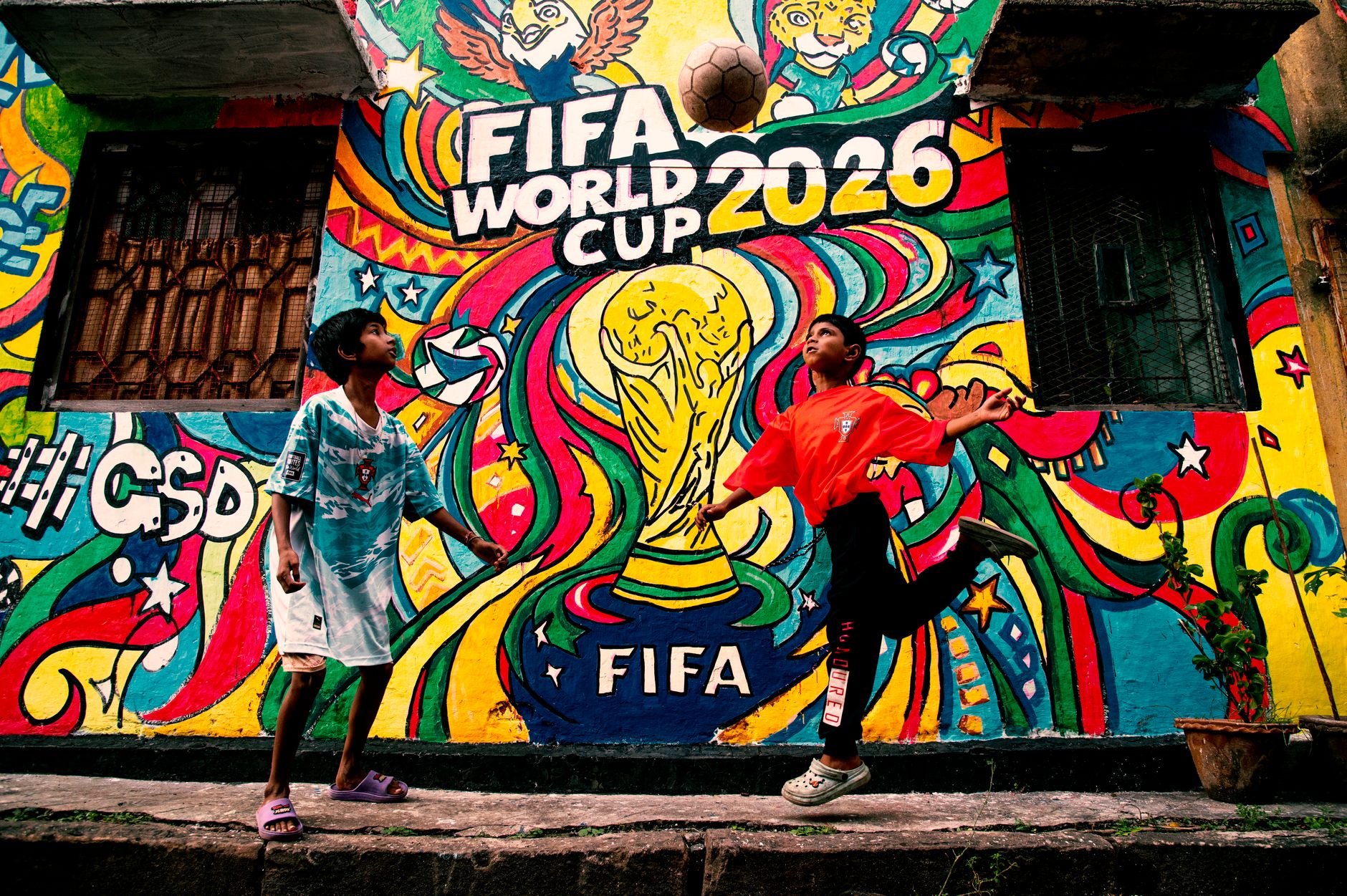
Photo by Anirban Das on Pexels
For bankroll protection, readers can use a simple expected-value check: expected value = probability of success multiplied by potential return, minus probability of failure multiplied by the stake. Keep stakes fixed, avoid chasing losses, and never treat Tactical Review predictions as financial advice. The National Council on Problem Gambling offers information on safer gambling and support resources in the United States.
What does the 2026 schedule mean now?
The 2026 schedule means that team context, venue, and timing should carry more weight than reputation alone. France, Argentina, Brazil, England, Germany, Spain, Portugal, and other major football nations may begin as obvious contenders, but the expanded route creates more opportunities for tactical mismatches and fatigue-related surprises. A famous badge improves attention; it does not automatically improve expected goals.
The schedule also changes content consumption. Fans will need a reliable way to track 104 fixtures, 16 venues, 48 squads, qualification scenarios, and daily injury updates. A static tournament bracket becomes outdated quickly when third-place rankings, goal difference, and disciplinary situations are involved. That is why Tactical Review’s World Cup 2026 coverage focuses on continuing updates rather than one oversized prediction published before the opening match.
A useful monitoring system should record:
- Match date, local kickoff, and venue.
- Previous match minutes for key players.
- Travel distance and time-zone change.
- Goals scored, goals conceded, and expected-goal trend.
- Set-piece strength and defensive vulnerability.
- Confirmed lineups and bench quality.
- Qualification scenario and tie-breaker requirements.
The practical risk is confirmation bias. If you support Brazil, Argentina, England, or the United States, you will notice evidence supporting that team and quietly ignore the awkward evidence. Your brain is not a neutral data centre, despite what your group chat says. Use a written checklist before the match, then compare the final result with the original reasoning rather than rewriting history afterward.
The 2026 World Cup is also a test of scheduling fairness. FIFA must balance commercial demands, venue logistics, player welfare, and competitive integrity across three countries. The FIFPRO player workload research has repeatedly highlighted the risks of congested calendars and excessive match loads. That evidence does not predict a winner, but it explains why rotation and recovery deserve measurable attention.
Ready to follow the tournament with a structured approach? Use Tactical Review for fixture updates, tactical breakdowns, and player-stat comparisons.
What are three predictions for the next quarter?
The next quarter should bring clearer qualification outcomes, more reliable squad projections, and sharper venue-based analysis for the 2026 FIFA World Cup. These are not predictions of the final champion; they are forecasts about the information environment leading into the tournament. That distinction matters because predicting what becomes knowable is often more accurate than predicting a single winner months ahead.
1. Qualification lists will become the first major filter
By the next quarter, FIFA’s regional qualification pathways should reduce the number of uncertain places and make confederation strength easier to compare. UEFA, CONMEBOL, CONCACAF, AFC, CAF, and OFC do not produce identical qualification environments, so raw qualifying records require context. A dominant record in one region cannot be transferred directly into a World Cup win probability without adjusting for opponent quality.
2. Venue and travel models will gain practical value
As match assignments and team bases become clearer, analysts will estimate travel burdens more accurately. The largest edge will not come from saying “travel matters”; everybody says that. It will come from measuring the number of time zones crossed, recovery days available, climate changes, and whether a team has to relocate between group fixtures. Small schedule differences can create a meaningful edge when two teams are otherwise close.
3. Lineup-based predictions will outperform reputation-based picks
The strongest short-term forecasts will probably arrive close to kickoff, when injuries, suspensions, rotations, and tactical choices are known. A team’s pre-tournament rating may be useful for a broad prior, but the confirmed XI supplies the sharper update. In Bayesian terms, reputation is the prior and the lineup is new evidence; ignoring the evidence because the prior feels comfortable is mathematically lazy.
My blunt forecast is that many casual predictions will fail because they treat the 2026 World Cup as a familiar 32-team tournament with extra decoration. It is not. The number of groups, the Round of 32, the eight third-place qualifiers, and the three-country geography alter the decision tree. If you want a defensible view, update your model after every meaningful piece of information.
Read the latest tournament analysis before the schedule moves again, because waiting until your prediction is already stale is not a strategy.
Key World Cup 2026 schedule facts
- Tournament dates: June 11 to July 19, 2026.
- Host countries: Canada, Mexico, and the United States.
- Teams: 48.
- Total matches: 104.
- Host venues: 16.
- Group structure: 12 groups of four.
- Group matches per team: Three.
- Knockout entry: Top two teams in every group plus the eight best third-placed teams.
- Opening match venue: Estadio Azteca, Mexico City.
- Final venue: MetLife Stadium, East Rutherford, New Jersey.
- Previous standard format: 32 teams and 64 matches.
- Main analytical risks: Travel, recovery, climate, lineup changes, and third-place qualification.
Frequently Asked Questions
Q: What is the FIFA World Cup 2026 format?
A: The FIFA World Cup 2026 features 48 teams divided into 12 groups of four, followed by a 32-team knockout phase. Each team plays three group matches, and the top two teams from each group plus the eight best third-placed teams advance. The knockout route begins with the Round of 32 and ends with the final on July 19, 2026.
Q: When does the World Cup 2026 start and end?
A: The 2026 FIFA World Cup starts on June 11, 2026, and ends on July 19, 2026. The opening match is scheduled for Estadio Azteca in Mexico City, while the final is scheduled for MetLife Stadium in East Rutherford, New Jersey. Confirm kickoff times and venue details through FIFA or ESPN because fixture information can be updated.
Q: Which countries host the World Cup 2026?
A: Canada, Mexico, and the United States host the 2026 FIFA World Cup. Matches are planned across 16 venues, including Toronto, Vancouver, Mexico City, Guadalajara, Monterrey, Los Angeles, Seattle, Dallas, Atlanta, Miami, and New York/New Jersey. The three host nations qualify automatically, while other teams qualify through their respective FIFA confederations.
Q: How do teams qualify for the World Cup 2026 knockout stage?
A: The top two teams in each of the 12 groups qualify automatically, and the eight best third-placed teams also advance. This creates a 32-team knockout bracket beginning with the Round of 32. Third-place rankings are compared using FIFA’s official competition rules, so points, goal difference, goals scored, disciplinary records, and other tie-breakers may become important.
Q: What is the difference between the 2022 and 2026 World Cup formats?
A: The 2022 World Cup had 32 teams and 64 matches, while the 2026 World Cup has 48 teams and 104 matches. Qatar 2022 used eight groups of four and began its knockout stage with 16 teams; 2026 uses 12 groups and adds a Round of 32. The expanded format increases fixture volume, travel demands, and qualification complexity.
Q: How should I make a World Cup 2026 prediction?
A: Start with team strength, then adjust for lineup news, injuries, rest days, venue conditions, travel, tactical matchups, and group qualification pressure. Use FIFA’s official schedule and confirmed team sheets rather than relying only on reputation or old tournament results. If gambling is involved, set a fixed budget, use small stakes, avoid chasing losses, and remember that probability never guarantees an outcome.
Q: What should I do if a World Cup 2026 fixture or kickoff time changes?
A: Check FIFA’s official World Cup 2026 schedule first, then verify the update through a reputable sports provider such as ESPN. Record the revised date, local time, venue, and broadcast information before planning travel or placing any prediction. Do not rely on an old screenshot or social media post, because schedule details and operational arrangements can change before the tournament.
The 2026 FIFA World Cup offers more football, more teams, and more ways for a lazy forecast to go wrong. Track the schedule, quantify the travel and recovery variables, confirm the lineups, and separate a team’s chance of qualifying from its chance of winning the tournament. Tactical Review will continue covering predictions, tactics, player statistics, and tournament developments throughout the competition.
For ongoing World Cup 2026 updates, start with the latest Tactical Review analysis.