2026 World Cup: 3 Essential Insights
The 2026 FIFA World Cup will be hosted by Canada, Mexico, and the United States, with 48 teams competing across 16 host cities from June 11 to July 19, Kansas City, Missouri, is one of the American ho...

2026 World Cup: 3 Essential Insights
The 2026 FIFA World Cup will be hosted by Canada, Mexico, and the United States, with 48 teams competing across 16 host cities from June 11 to July 19, 2026. Kansas City, Missouri, is one of the American host cities, with matches planned at Arrowhead Stadium, while FIFA Fan Festival Kansas City is expected to give non-ticketed supporters a central place to watch, eat, and celebrate. The expanded format creates 104 matches, meaning more markets for match analysis but also more uncertainty for anyone making predictions. Tactical Review covers team tactics, player statistics, match forecasts, and tournament news rather than treating every favorite as a safe pick. Start by confirming official fixtures, venue details, squad news, and legal betting rules in your location before risking money; probability beats excitement, and your favorite badge does not magically improve expected value.

Photo by ANDREW PETERSON on Pexels
The tournament is not merely a larger version of Qatar 2022. The number of teams rises from 32 to 48, the competition spans three countries, and the travel distances can materially affect preparation, recovery, and squad rotation. That matters whether you are planning a trip to Kansas City or studying a market on Brazil, France, England, Argentina, Mexico, or the United States. A 5% emotional boost from “home support” is not a measurable betting edge unless it survives comparison with injuries, rest days, opponent strength, and market price. Yes, that sounds less glamorous than shouting at a television, but football rewards evidence eventually.
Tactical Review approaches the 2026 World Cup through four layers: schedule context, tactical matchups, player availability, and price discipline. First, identify what a team must achieve in the group stage; then examine how its pressing, buildup, and defensive rest shape the matchup; finally, compare your estimated probability with the bookmaker’s implied probability after accounting for margin. Readers wanting a foundation can use our [Internal Link: beginner’s guide to World Cup predictions] before moving into player-level models.
Want a structured starting point for your tournament research?
The Bottom Line
The 2026 World Cup is a 48-team tournament hosted by Canada, Mexico, and the United States, and Kansas City is one of 16 host cities. Its biggest analytical challenge is not finding a famous team; it is measuring travel, rest, squad depth, and price across 104 matches. That is where a disciplined process has more value than hot takes.
FIFA has confirmed the three-country hosting plan and the expanded competition structure on its official FIFA World Cup 2026 page. The opening match is scheduled for June 11, 2026, and the final for July 19, 2026. Those dates are useful anchors, but individual kickoff times, match assignments, transport arrangements, and venue policies should be checked against FIFA and host-city updates rather than copied from an old social post. Information expires quickly around major tournaments, and the internet is very good at preserving outdated confidence.
Kansas City’s official host-city planning emphasizes transportation links, regional access, and FIFA Fan Festival Kansas City. Motorcoach services are designed to connect Kansas City International Airport, the stadium area, fan events, and regional destinations on match days. That creates a practical edge for visitors: booking transport early may reduce the risk of expensive last-minute rides, road congestion, or a heroic but foolish attempt to walk several miles in summer heat.
For bettors, Kansas City is relevant even when the match is not. A fan festival can change public attention, media volume, and local demand, but those effects are difficult to convert into a reliable probability advantage. The stronger signal remains team information: expected lineups, tactical fit, defensive injuries, and schedule compression. According to FIFA’s official competition information, tournament details should be treated as a changing operational document, not a permanent spreadsheet.
[Internal Link: 2026 World Cup host cities and stadium guide]
What Players Actually See
Players at the 2026 World Cup will see a tournament shaped by long-haul travel, unfamiliar climates, different playing surfaces, and rapidly changing recovery demands. Canada, Mexico, and the United States cover a huge geographic area, so a team’s first match location can influence preparation more than casual previews admit. A national side moving between Vancouver, Mexico City, Miami, Atlanta, or Kansas City may face different humidity, altitude, heat, and travel burdens. The practical question is not “Which team has the best names?” It is “Which team can repeat its best performance under these conditions?” Isn’t that the point?
The 16 host cities create different environmental profiles. Mexico City brings altitude considerations, while Miami and other southern locations can create heat and humidity stress; Kansas City can bring summer heat and intense local support. These variables do not automatically decide a match, but they affect substitutions, pressing intensity, hydration planning, and late-game errors. A simple operational method is to record each team’s previous venue, travel distance, rest interval, and likely temperature before assigning a performance adjustment. Do not invent a precise 7.3% effect from thin air; use a range and admit uncertainty.
A useful player view also includes role stability. A striker who scores regularly for Manchester City may still be a poor anytime-scorer selection if the opponent blocks central access and forces wide deliveries. A full-back from Bayern Munich may have strong attacking numbers but face a transition threat that limits forward movement. Tactical Review therefore tracks shot location, progressive passes, pressures, aerial actions, and minutes played instead of relying only on goals and assists. For deeper evaluation, see our [Internal Link: player statistics and form analysis guide].
The 2026 expansion increases the number of group-stage games, but more matches do not mean every match offers equal information. Early tournament samples are noisy: one deflection, penalty, or red card can distort goal-based conclusions. After 30 matches, a team’s observed scoring rate still may not reflect its underlying attacking quality if shot volume and chance quality remain unstable. Your spreadsheet is not a crystal ball, friend; it is a calculator with an anxiety problem.
Get the latest tactical and statistical context before making a forecast.
The 3 Things That Matter Most
1. Schedule and recovery
The first major variable is recovery time. Compare match dates, travel requirements, local kickoff conditions, and the likely rotation pattern before comparing two teams’ raw ratings. A side with a deeper bench can preserve pressure and intensity, while a team dependent on 11 starters may deteriorate sharply after consecutive demanding matches. World Cup knockout football punishes shallow squads because one exhausted midfielder can turn a controlled game into a transition contest within minutes.
Track these inputs in order:
- Match date and rest days.
- Previous and next venue.
- Travel distance and time-zone change.
- Temperature, humidity, and altitude.
- Confirmed injuries and probable rotation.
This is an information-gain point many basic previews miss: travel should not be treated as a universal negative. A team traveling west may experience a different body-clock challenge from a team traveling east, and a short domestic flight is not equivalent to a cross-border journey with customs, security, and training disruption. The data will be imperfect, so model a modest uncertainty band rather than claiming false precision. If your predicted win probability changes from 51% to 54% solely because of a vague “fatigue factor,” stop and check your assumptions.
2. Tactical interaction
The second variable is matchup behavior. Argentina’s controlled possession, France’s transition threat, Brazil’s individual quality, England’s set-piece routines, Mexico’s home-region familiarity, and the United States’ pressing ambition are not fixed identities; coaches can alter them according to opponent and scoreline. Compare buildup shape, defensive line height, pressure resistance, set-piece defense, and the spaces each team concedes. A team that dominates weak opponents may look ordinary against a compact block, while a counterattacking side can become dangerous when its opponent commits full-backs forward.
Use event data from reputable providers, then watch enough full-match footage to understand the sequence behind the numbers. Stats Perform and Opta Analyst provide widely used football data and analysis, but data definitions differ. “Pressure,” “big chance,” and “progressive action” are not always identical across providers. That is another edge case: combining sources without checking definitions can produce a beautiful, meaningless model.
3. Price and expected value
The third variable is price. If a bookmaker offers decimal odds of 2.00, the raw implied probability is 50%; odds of 1.80 imply 55.56% before considering margin. A bet becomes attractive only when your estimated probability is comfortably higher than the market-implied probability after accounting for model error. If your estimate is 52% and the market implies 50%, the theoretical edge is just 2 percentage points, which may be too thin once lineup uncertainty and bookmaker margin enter the calculation.
A disciplined record should include:
- Selection and market.
- Odds, bookmaker, and timestamp.
- Your estimated probability.
- Closing price, if available.
- Result and closing-line movement.
- Stake size and reason for the decision.
The practical conclusion is blunt: finding winners is not enough if the price is bad. A 70% favorite at odds of 1.25 can lose money over time if the true probability is 76%? No, that particular price would be positive only if your estimate is truly above 80%; arithmetic does not care how confident your group chat sounds. Use a [Internal Link: expected value and bankroll management guide] and follow local gambling laws, age rules, and safer-play limits.

Photo by Franco Monsalvo on Pexels
Edge Cases & Gotchas
The first trap is schedule confusion. Host-city websites may describe transport, festival programming, and stadium access, while FIFA controls official tournament information; those sources serve different purposes. Kansas City’s FIFA Fan Festival is a public-facing experience connected to the wider tournament atmosphere, but entry rules, capacity, operating hours, and programming can change. Check Kansas City FIFA World Cup 2026 and FIFA before traveling, especially if your plan depends on a specific screening or bus route.
The second trap is treating the 48-team format as a simple increase in entertainment. The group-stage structure includes more teams and matches, but qualification incentives can differ across final matchdays. A team may prioritize avoiding defeat, protect goal difference, or rotate after securing advancement. Therefore, a favorite’s motivation is not a binary “must win” label; it is a scenario tree with several possible incentives. Model the likely state of the group, and do not pretend a table snapshot is enough.
The third trap concerns player props and market timing. A listed player may start, appear from the bench, change position, or be withdrawn after warm-up. The most useful operational habit is to timestamp your research and recheck confirmed lineups before kickoff. One practitioner-style edge case deserves attention: a late lineup change can invalidate a player-shot estimate even when the team’s overall win probability barely moves. The player may now take fewer set pieces, defend deeper, or lose the expected service pattern.
The fourth trap is responsible gambling. Betting is a financial risk, not a loyalty test, and no model eliminates variance. The UK Gambling Commission describes responsible gambling controls and consumer protections for its regulated market; other jurisdictions use different rules. Its public guidance repeatedly emphasizes that “gambling should be a fun activity, not a way to make money.” Use deposit limits, never chase losses, and avoid unlicensed operators. If you cannot afford to lose the stake, the expected value is irrelevant because the downside is already unacceptable.
Want to compare fixtures without ignoring the ugly details?
Verdict
The best way to follow the 2026 World Cup is to combine tournament facts with a repeatable decision process. Start with FIFA’s 48-team, 104-match structure and the June 11 to July 19 calendar; then add host-city realities from Kansas City, Mexico City, Miami, and the other 13 locations. Finally, evaluate team tactics, player availability, travel, weather, price, and responsible-play limits. That sequence is more reliable than selecting a famous shirt and calling it analysis.
Kansas City deserves particular attention because Arrowhead Stadium, FIFA Fan Festival Kansas City, regional transport planning, and the city’s established football culture create a complete supporter experience beyond the stadium gate. However, atmosphere is not a guaranteed betting edge, and the expanded tournament creates both more opportunities and more noise. Tactical Review’s job is to separate useful signals from attractive nonsense using match predictions, tactical reviews, player statistics, and daily tournament coverage.
My final rule is simple: make a probability estimate, write down the assumptions, and decide what evidence would change your mind. If you cannot explain why the price beats the risk, do not place the bet. Yes, that means occasionally doing nothing while everyone else celebrates a “lock.” Annoying, perhaps; mathematically sensible, absolutely.
Read the latest 2026 World Cup coverage before planning your next research session.
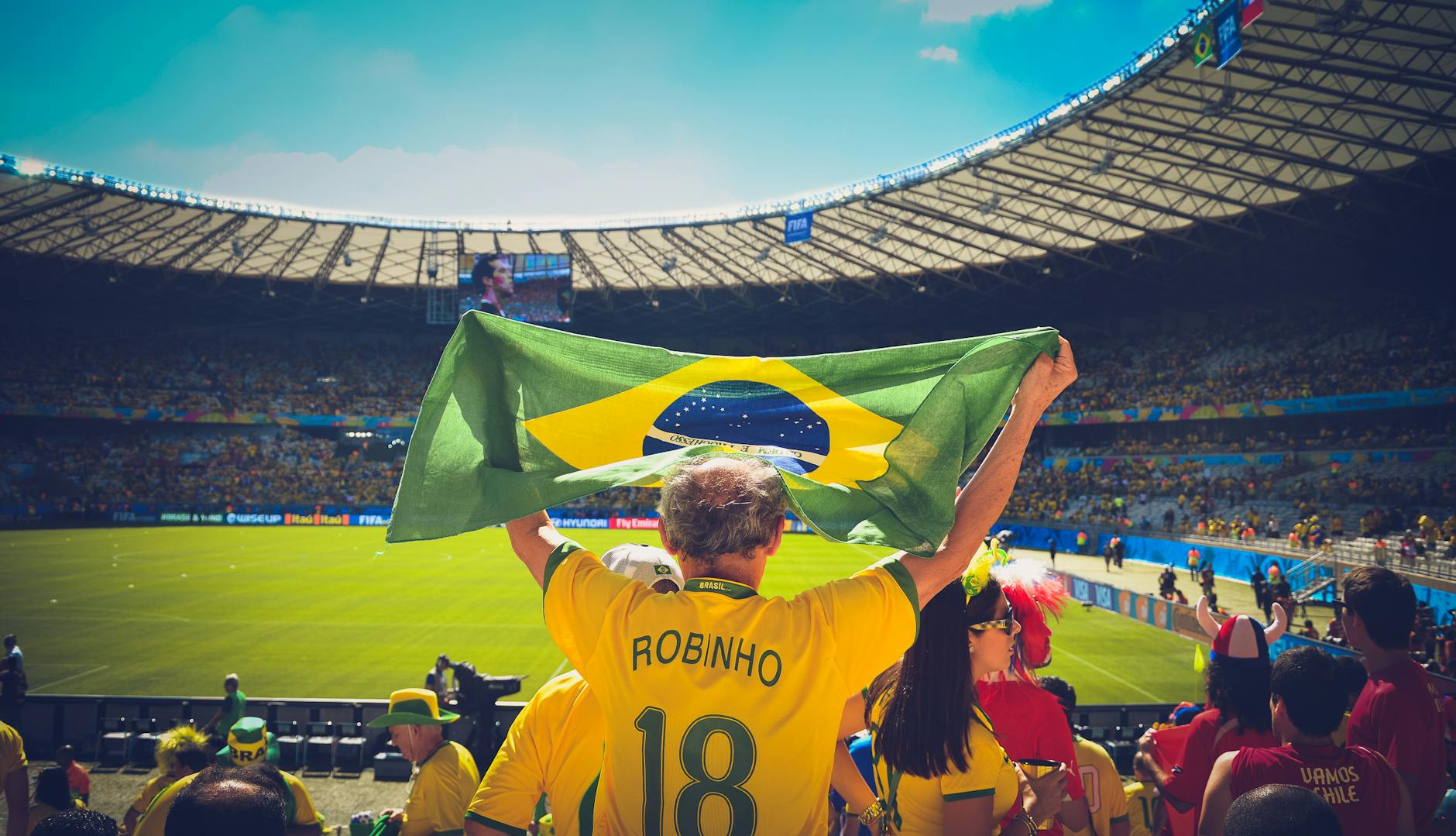
Photo by Caio on Pexels
Frequently Asked Questions
Q: What is the 2026 World Cup?
A: The 2026 World Cup is FIFA’s men’s football tournament hosted by Canada, Mexico, and the United States. It will feature 48 teams and 104 matches across 16 host cities, with the tournament scheduled from June 11 to July 19, 2026. The expanded format creates more group-stage and knockout scenarios than the traditional 32-team competition, so readers should verify the latest FIFA schedule before relying on older articles.
Q: How do I follow the 2026 World Cup in Kansas City?
A: Follow official FIFA and Kansas City host-city updates for stadium access, fan events, and transportation. Kansas City plans FIFA Fan Festival programming and motorcoach connections involving Kansas City International Airport, the stadium area, and regional destinations on match days. Check operating times, capacity rules, ticket requirements, and route changes before traveling because event details can change as the tournament approaches.
Q: What is the difference between the FIFA Fan Festival and a stadium match?
A: A stadium match is the ticketed live game, while FIFA Fan Festival Kansas City is a public supporter event featuring match screenings, food, entertainment, and cultural activities. The fan festival can provide tournament atmosphere without a stadium ticket, but it does not guarantee access to every program or screening. Confirm official entry and schedule information through Kansas City FIFA World Cup 2026 before making travel arrangements.
Q: Is Kansas City a good place to watch the 2026 World Cup?
A: Kansas City is a strong viewing destination because it combines an official host-city stadium, FIFA Fan Festival activity, transport planning, food culture, and established football support. Arrowhead Stadium gives visitors access to the match environment, while the festival offers a separate gathering point for fans without tickets. Summer heat, congestion, accommodation demand, and transport capacity remain practical risks, so early planning matters.
Q: How much does it cost to attend the 2026 World Cup?
A: There is no single fixed cost because expenses include match tickets, accommodation, transport, meals, and local activities. A visitor to Kansas City should budget separately for official ticket pricing, hotel demand during match periods, airport transfers, stadium transport, and fan-festival spending. Avoid unofficial ticket sellers, compare refundable lodging options, and confirm prices through FIFA or authorized providers rather than trusting social-media listings.
Q: Why can a World Cup prediction fail after strong research?
A: A prediction can fail because football has high short-term variance, and a red card, penalty, injury, deflection, or goalkeeper error can overwhelm a small pre-match edge. Even a model that correctly estimates a team’s 60% win probability expects that team to lose 40% of the time. Track long-term decision quality, closing prices, and calibration instead of judging one result as proof that the method worked or failed.
Q: What should I do if I start chasing 2026 World Cup losses?
A: Stop betting immediately, use account deposit or loss limits, and contact a regulated gambling-support service in your jurisdiction. Chasing losses increases stake size while emotional judgment is impaired, turning a bad result into a potentially larger financial problem. Tactical Review content is for information and analysis, not a promise of profit; only gamble legally, only use money you can afford to lose, and seek help when betting stops feeling controlled.